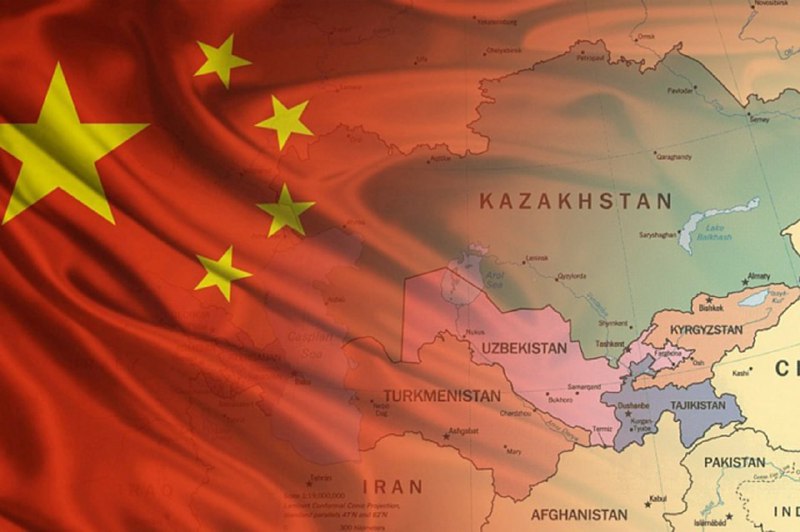
Late 2025 and early 2026 are a period of summing up results and announcing plans. China's cooperation with the countries of Central Asia has broken another record in terms of trade turnover and investment in transport, infrastructure, and industrial projects.
Experts predict that China will continue to strengthen its position in the region in 2026.
2025 Results
Trade turnover between China and the countries of Central Asia exceeded $106 billion in 2025. Exports to Central Asia exceeded $71 billion, consisting of high-value-added goods, including industrial equipment, vehicles, mobile phones, and so on. Imports reached $35.1 billion, primarily energy, mineral resources, and agricultural products.
In terms of accumulated foreign direct investment in the region over the past 10 years, China holds the lead with $36 billion. In addition to traditional areas of interest (mining, infrastructure and logistics, and energy), China is investing in new areas, such as renewable energy.
Kazakhstan and China – Economic Projects
From 2015 to June 2025, Kazakhstan remained the main recipient of Chinese investment in Central Asia, with $11.4 billion. Uzbekistan, which has no common border with China and is the most populous country in the region, ranks second with $10.7 billion. Kazakhstan's external debt to China as of October 1, 2025, was $10.3 billion.
According to the Eurasian Development Bank, the majority of investment has been in Kazakhstan's raw materials sector (46%). The share of manufacturing and energy began to grow several years ago.
Chinese projects announced in Kazakhstan include a cement plant in the Aktobe region and renewable energy projects.
1) Construction of the plant is expected to be completed by the end of 2026. It is expected to produce up to 2 million tons of cement per year. The project cost is 120 billion tenge ($218.7 million). It is being implemented jointly with West China Cement, one of China's largest cement companies.
2) Renewable energy projects include two wind farms with a total capacity of 1.5 GW and one solar power plant with a capacity of 300 MW. The projected generation is expected to be approximately 5.7 billion kWh of electricity annually. The power facilities will be built in three regions of Kazakhstan: Pavlodar, Karaganda, and Turkestan. The total planned investment is $2.2 billion.
The largest mining project in Kazakhstan with Chinese participation is announced to be gas production at the Sozak field in the Kyzylorda region. Reserves of hard-to-recover gas may exceed 1 trillion cubic meters. Chinese companies have pledged to invest approximately $8 billion in the project. Further exploration is planned for 2026-2027, with first gas expected at the end of 2026.
China's Transport Projects in Kazakhstan
The modernization of railway and road infrastructure is generally being financed by Kazakhstan itself. So far, China has invested in two major projects, both expected to launch in 2026.
The launch of the second phase of the container hub at the port of Aktau has been announced;
The Kolzhat transport and logistics center (TLC) in the Almaty region may open towards the end of the year.
In January 2026, information was released about the construction of the Kuryk multifunctional port complex. It was reported that the Chinese company Guoyou Materials Group was developing a project to develop freight transport between China and Europe within the Middle Corridor.
The project envisioned the construction of seven berths, warehouse and logistics infrastructure, rail and road access roads, and the implementation of digital freight flow management systems (TOS and EDI).
"In the first stage, the transport and logistics complex will be able to handle up to 180,000 TEUs, up to 180,000 vehicles, and up to 3 million tons of bulk cargo per year. The total project cost is estimated at $1.1 billion. Expected investment in the first stage is $0.3 billion."
Kyrgyzstan and China – Economic Projects
In Kyrgyzstan, China traditionally invests in the following sectors: mining, road construction and modernization, and the construction and reconstruction of energy facilities. No plans to create large-scale enterprises have been announced in recent months.
China remains Kyrgyzstan's largest creditor and investor (Russia and Turkey are also among the top three investors – LogiStan). More than a third of Kyrgyzstan's public debt is held by China, and China's investment in the Kyrgyz economy by the end of 2025 amounted to $166 million. Of this, more than two-thirds was in the mining and manufacturing industries.
In 2026, construction of solar and wind power plants is scheduled to begin in the city of Balykchy and in the Kemin district of Chui Oblast, and 18 small hydroelectric power plants, fully or partially financed by China, are also planned for commissioning.
The estimated capacity of the solar and wind power plants is 300 MW each. The combined capacity of the small hydroelectric power plants is 78.57 MW. The current stages of these announced projects have not been disclosed.
Tajikistan and China – Economic Projects
Chinese projects in Tajikistan have obvious similarities with those in Kyrgyzstan. In the two countries with the weakest economies in Central Asia, China is building and repairing roads, extracting resources, and constructing power plants.
Key transport projects for late 2025 – early 2026 include:
Completion of the modernization of the Kalai Khumb – Vanj highway (as part of the Dushanbe – China highway project). The Chinese company CRBC is building: 2 tunnels, 14 bridges, and 5 avalanche control galleries;
Construction and reconstruction of 50 km of the Dangara – Guliston highway;
Projects to construct and reconstruct 52 km of roads in the Sughd region, which are of international and national significance;
Reconstruction of 4.5 km of road in the Gorno-Badakhshan Autonomous Region, construction of an 82-meter bridge over the Shorf River and a 200-meter bridge over the Gund River.
Details of the projects, their cost, and completion dates have not been disclosed.
Tajik authorities have repeatedly stated their willingness to work with Chinese partners in the renewable energy sector. Much of the information published in the media is vague and lacking in concrete details.
For example, in January 2026, the Chinese company Dayu New Energy Limited announced its intention to implement a project to build solar and wind power plants in the Khatlon region. The total installed capacity of the facility is 500 MW.
Following the meeting, the head of the Khatlon region administration supported the construction initiative.
Turkmenistan and China — Economic Projects
There is little information about China's activities in Turkmenistan. It is known that energy projects will predominate in the period 2025-2026. For example, the Chinese company CNPC is beginning development of the fourth stage of the Galkynysh field and plans to launch Line D of the gas pipeline to increase natural gas imports to 65 billion cubic meters per year.
Uzbekistan and China — Economic Projects
By the end of 2025, Uzbekistan was among the top five largest suppliers of natural gas to China. Revenue from supplies exceeded $773 million, a 1.4% increase compared to 2024. Large-scale cooperation in the gas sector is not expected in 2026. The Chinese company CNPC is fulfilling its obligations under projects initiated in 2024-2025, namely:
development of fields in the Bukhara region;
construction of underground gas storage facilities;
modernization of the Bukhara Oil Refinery.
Detailed information about the projects is not publicly available. According to statistics cited by Neftegaz magazine, "gas production in Uzbekistan has been declining for several years. In January-November 2025, it was 38.9 billion cubic meters. Compared to the same period in 2024, this figure has decreased by 5.12%. Gas condensate production decreased by 8.44% to 1.02 million tons. Oil production decreased by 8.6% to 601,200 tons."
The news in the mining sector appears more optimistic. In Uzbekistan's Jizzakh region, Chinese investors plan to begin commercial tungsten mining at the Kuytosh deposit in 2026. The metal reserves are estimated at 2.5 million tons.
Underground mining and ore processing will be carried out using shaft mining, at a depth of approximately 500 meters. A plant for processing ore into tungsten is also planned here. The expected investment volume and other details are not disclosed.
Construction of a $400 million Uzbek-Chinese agricultural innovation center is also planned for early 2026 in the Jizzakh region.
Open sources describe the project in general terms without providing specifics: "The project, which includes the creation of a production facility and the use of 30 hectares of land, is being implemented as part of attracting Chinese investment to modernize the industry."
Other announced projects involving Chinese participation for 2026 include:
The creation of a $200 million agro-technopark. Its functions will include the implementation of advanced technologies and digitalization.
Agricultural development and logistics. It will be located on 116 hectares (with adjacent areas of up to 5,500 hectares) and will include: research laboratories, drone production, smart irrigation systems, and large-scale agricultural production;
Construction of an agricultural machinery assembly plant in Kashkadarya. Details are unavailable;
Renewable energy projects – small hydroelectric power plants, wind power plants, and solar power plants. Construction of some facilities was supposed to begin as early as 2025, but there is no information about this in open sources;
Joint projects between Uzbekistan and China in the textile and automotive industries are ongoing, and the parties have not announced any significant changes to plans or withdrawals from commitments.
China's transport projects in Uzbekistan
One of the key logistics projects in terms of Uzbekistan's trade with China is the start of construction of the China-Kyrgyzstan-Uzbekistan railway. The project, discussed for over 20 years, began implementation in 2025. Tunnel construction is scheduled for 2026.
Meanwhile, Uzbekistan is negotiating with China to build transport and logistics infrastructure in the Andijan region, through which the railway will pass through Uzbekistan.
China Shandong Huada Group is considering investing $500 million in a new transport corridor, which includes two future railways: one starting in Lhasa (Tibet Autonomous Region, China) and the aforementioned China-Kyrgyzstan-Uzbekistan line, which will pass through the Xinjiang Uygur Autonomous Region, China.
Experts predict that China will continue to strengthen its position in the region in 2026.
2025 Results
Trade turnover between China and the countries of Central Asia exceeded $106 billion in 2025. Exports to Central Asia exceeded $71 billion, consisting of high-value-added goods, including industrial equipment, vehicles, mobile phones, and so on. Imports reached $35.1 billion, primarily energy, mineral resources, and agricultural products.
In terms of accumulated foreign direct investment in the region over the past 10 years, China holds the lead with $36 billion. In addition to traditional areas of interest (mining, infrastructure and logistics, and energy), China is investing in new areas, such as renewable energy.
Kazakhstan and China – Economic Projects
From 2015 to June 2025, Kazakhstan remained the main recipient of Chinese investment in Central Asia, with $11.4 billion. Uzbekistan, which has no common border with China and is the most populous country in the region, ranks second with $10.7 billion. Kazakhstan's external debt to China as of October 1, 2025, was $10.3 billion.
According to the Eurasian Development Bank, the majority of investment has been in Kazakhstan's raw materials sector (46%). The share of manufacturing and energy began to grow several years ago.
Chinese projects announced in Kazakhstan include a cement plant in the Aktobe region and renewable energy projects.
1) Construction of the plant is expected to be completed by the end of 2026. It is expected to produce up to 2 million tons of cement per year. The project cost is 120 billion tenge ($218.7 million). It is being implemented jointly with West China Cement, one of China's largest cement companies.
2) Renewable energy projects include two wind farms with a total capacity of 1.5 GW and one solar power plant with a capacity of 300 MW. The projected generation is expected to be approximately 5.7 billion kWh of electricity annually. The power facilities will be built in three regions of Kazakhstan: Pavlodar, Karaganda, and Turkestan. The total planned investment is $2.2 billion.
The largest mining project in Kazakhstan with Chinese participation is announced to be gas production at the Sozak field in the Kyzylorda region. Reserves of hard-to-recover gas may exceed 1 trillion cubic meters. Chinese companies have pledged to invest approximately $8 billion in the project. Further exploration is planned for 2026-2027, with first gas expected at the end of 2026.
China's Transport Projects in Kazakhstan
The modernization of railway and road infrastructure is generally being financed by Kazakhstan itself. So far, China has invested in two major projects, both expected to launch in 2026.
The launch of the second phase of the container hub at the port of Aktau has been announced;
The Kolzhat transport and logistics center (TLC) in the Almaty region may open towards the end of the year.
In January 2026, information was released about the construction of the Kuryk multifunctional port complex. It was reported that the Chinese company Guoyou Materials Group was developing a project to develop freight transport between China and Europe within the Middle Corridor.
The project envisioned the construction of seven berths, warehouse and logistics infrastructure, rail and road access roads, and the implementation of digital freight flow management systems (TOS and EDI).
"In the first stage, the transport and logistics complex will be able to handle up to 180,000 TEUs, up to 180,000 vehicles, and up to 3 million tons of bulk cargo per year. The total project cost is estimated at $1.1 billion. Expected investment in the first stage is $0.3 billion."
Kyrgyzstan and China – Economic Projects
In Kyrgyzstan, China traditionally invests in the following sectors: mining, road construction and modernization, and the construction and reconstruction of energy facilities. No plans to create large-scale enterprises have been announced in recent months.
China remains Kyrgyzstan's largest creditor and investor (Russia and Turkey are also among the top three investors – LogiStan). More than a third of Kyrgyzstan's public debt is held by China, and China's investment in the Kyrgyz economy by the end of 2025 amounted to $166 million. Of this, more than two-thirds was in the mining and manufacturing industries.
In 2026, construction of solar and wind power plants is scheduled to begin in the city of Balykchy and in the Kemin district of Chui Oblast, and 18 small hydroelectric power plants, fully or partially financed by China, are also planned for commissioning.
The estimated capacity of the solar and wind power plants is 300 MW each. The combined capacity of the small hydroelectric power plants is 78.57 MW. The current stages of these announced projects have not been disclosed.
Tajikistan and China – Economic Projects
Chinese projects in Tajikistan have obvious similarities with those in Kyrgyzstan. In the two countries with the weakest economies in Central Asia, China is building and repairing roads, extracting resources, and constructing power plants.
Key transport projects for late 2025 – early 2026 include:
Completion of the modernization of the Kalai Khumb – Vanj highway (as part of the Dushanbe – China highway project). The Chinese company CRBC is building: 2 tunnels, 14 bridges, and 5 avalanche control galleries;
Construction and reconstruction of 50 km of the Dangara – Guliston highway;
Projects to construct and reconstruct 52 km of roads in the Sughd region, which are of international and national significance;
Reconstruction of 4.5 km of road in the Gorno-Badakhshan Autonomous Region, construction of an 82-meter bridge over the Shorf River and a 200-meter bridge over the Gund River.
Details of the projects, their cost, and completion dates have not been disclosed.
Tajik authorities have repeatedly stated their willingness to work with Chinese partners in the renewable energy sector. Much of the information published in the media is vague and lacking in concrete details.
For example, in January 2026, the Chinese company Dayu New Energy Limited announced its intention to implement a project to build solar and wind power plants in the Khatlon region. The total installed capacity of the facility is 500 MW.
Following the meeting, the head of the Khatlon region administration supported the construction initiative.
Turkmenistan and China — Economic Projects
There is little information about China's activities in Turkmenistan. It is known that energy projects will predominate in the period 2025-2026. For example, the Chinese company CNPC is beginning development of the fourth stage of the Galkynysh field and plans to launch Line D of the gas pipeline to increase natural gas imports to 65 billion cubic meters per year.
Uzbekistan and China — Economic Projects
By the end of 2025, Uzbekistan was among the top five largest suppliers of natural gas to China. Revenue from supplies exceeded $773 million, a 1.4% increase compared to 2024. Large-scale cooperation in the gas sector is not expected in 2026. The Chinese company CNPC is fulfilling its obligations under projects initiated in 2024-2025, namely:
development of fields in the Bukhara region;
construction of underground gas storage facilities;
modernization of the Bukhara Oil Refinery.
Detailed information about the projects is not publicly available. According to statistics cited by Neftegaz magazine, "gas production in Uzbekistan has been declining for several years. In January-November 2025, it was 38.9 billion cubic meters. Compared to the same period in 2024, this figure has decreased by 5.12%. Gas condensate production decreased by 8.44% to 1.02 million tons. Oil production decreased by 8.6% to 601,200 tons."
The news in the mining sector appears more optimistic. In Uzbekistan's Jizzakh region, Chinese investors plan to begin commercial tungsten mining at the Kuytosh deposit in 2026. The metal reserves are estimated at 2.5 million tons.
Underground mining and ore processing will be carried out using shaft mining, at a depth of approximately 500 meters. A plant for processing ore into tungsten is also planned here. The expected investment volume and other details are not disclosed.
Construction of a $400 million Uzbek-Chinese agricultural innovation center is also planned for early 2026 in the Jizzakh region.
Open sources describe the project in general terms without providing specifics: "The project, which includes the creation of a production facility and the use of 30 hectares of land, is being implemented as part of attracting Chinese investment to modernize the industry."
Other announced projects involving Chinese participation for 2026 include:
The creation of a $200 million agro-technopark. Its functions will include the implementation of advanced technologies and digitalization.
Agricultural development and logistics. It will be located on 116 hectares (with adjacent areas of up to 5,500 hectares) and will include: research laboratories, drone production, smart irrigation systems, and large-scale agricultural production;
Construction of an agricultural machinery assembly plant in Kashkadarya. Details are unavailable;
Renewable energy projects – small hydroelectric power plants, wind power plants, and solar power plants. Construction of some facilities was supposed to begin as early as 2025, but there is no information about this in open sources;
Joint projects between Uzbekistan and China in the textile and automotive industries are ongoing, and the parties have not announced any significant changes to plans or withdrawals from commitments.
China's transport projects in Uzbekistan
One of the key logistics projects in terms of Uzbekistan's trade with China is the start of construction of the China-Kyrgyzstan-Uzbekistan railway. The project, discussed for over 20 years, began implementation in 2025. Tunnel construction is scheduled for 2026.
Meanwhile, Uzbekistan is negotiating with China to build transport and logistics infrastructure in the Andijan region, through which the railway will pass through Uzbekistan.
China Shandong Huada Group is considering investing $500 million in a new transport corridor, which includes two future railways: one starting in Lhasa (Tibet Autonomous Region, China) and the aforementioned China-Kyrgyzstan-Uzbekistan line, which will pass through the Xinjiang Uygur Autonomous Region, China.